Do You Actually Need a CRM?
A Simple Guide for Growing Businesses
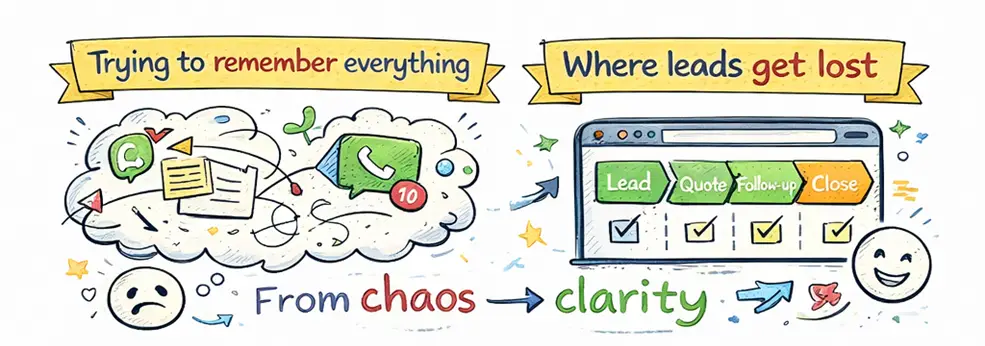
At some point, every growing business asks the same question:
“Do we actually need a CRM, or are we just overcomplicating things?”
It usually doesn’t come out of nowhere. It shows up after a missed follow-up, a lead that quietly slipped away, or that slightly chaotic moment where two people on your team contact the same client with completely different information.
That’s when things start to feel a bit… messy.
Here’s the truth: you don’t need a CRM just because it sounds like the next logical step. But there is a point where not having one starts holding you back in ways that aren’t always obvious at first.
Let’s make that point easier to recognise.
What It Really Means to Need a CRM

A CRM is often explained as a system for managing customer relationships, which sounds helpful… but also a bit vague.
In practice, it’s much simpler than that.
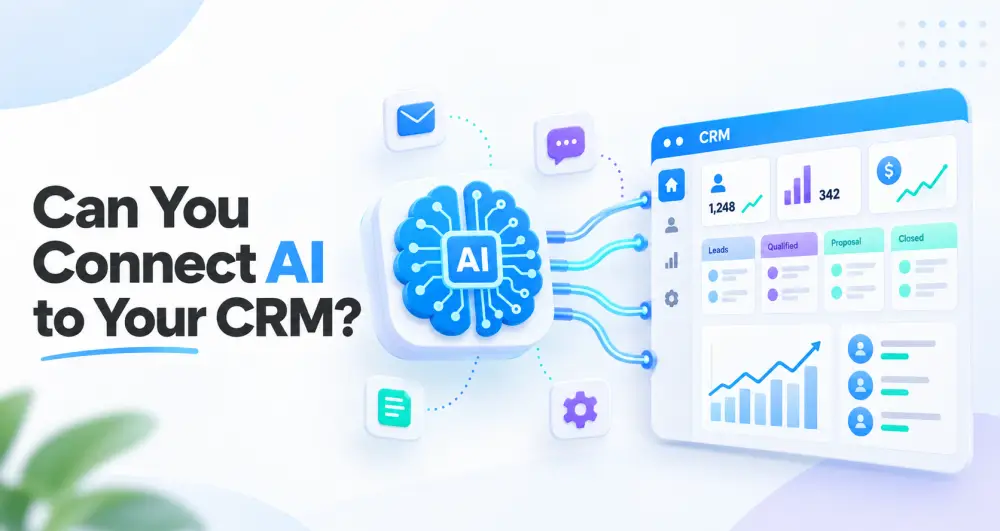
It’s the place where your leads, conversations, follow-ups, and sales pipeline all live together. Instead of being scattered across inboxes, spreadsheets, and someone’s memory, everything is visible, structured, and shared.
But here’s the key idea:
You only need a CRM when your current way of managing this information starts to break down.
If everything is still easy to track, easy to manage, and nothing is falling through the cracks, then you’re fine for now. But once things start slipping — even slightly — that’s when the question becomes more urgent.
The Real Signs You Might Need a CRM
Most businesses don’t have a dramatic “we need a CRM now” moment. It’s usually a slow build of small inefficiencies that start stacking up.
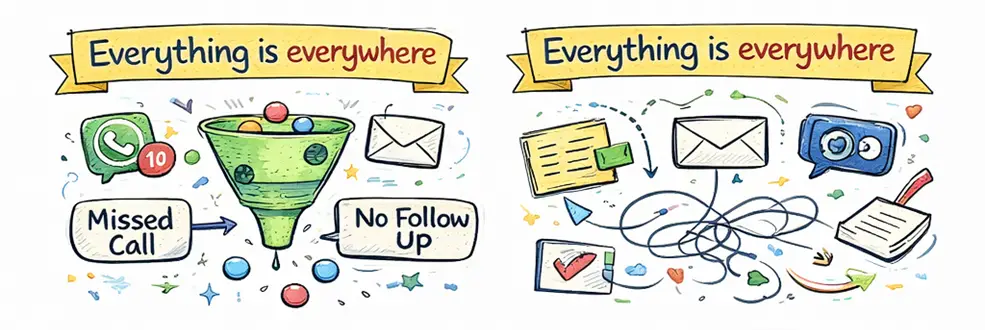
You might notice that leads are being tracked in multiple places, and no one is quite sure which version is the latest. Follow-ups happen, but not consistently, and sometimes only when someone remembers. Conversations sit in inboxes, making it difficult for anyone else to step in or help.
Over time, your sales pipeline becomes harder to see clearly. Deals stall, progress isn’t always obvious, and reporting becomes more guesswork than insight.
Individually, these issues seem manageable. Together, they create friction that quietly limits how fast you can grow.
That’s usually the moment where businesses realise they don’t just want better organisation — they need a CRM to create it.
When You Probably Don’t Need a CRM Yet
It’s just as important to recognise when you don’t need one.
If you’re running a small operation with a steady, manageable number of clients, and your current system still feels simple and under control, then adding a CRM might actually slow you down rather than help.
The same applies if your sales process is straightforward and doesn’t involve multiple stages, team members, or ongoing follow-ups. In these cases, a CRM can feel like unnecessary structure.
There’s nothing wrong with staying simple for as long as it works. The goal isn’t to adopt more tools — it’s to remove friction.
What Changes When You Start Using a CRM
When a business reaches the point where it genuinely needs a CRM, the shift is noticeable almost immediately.
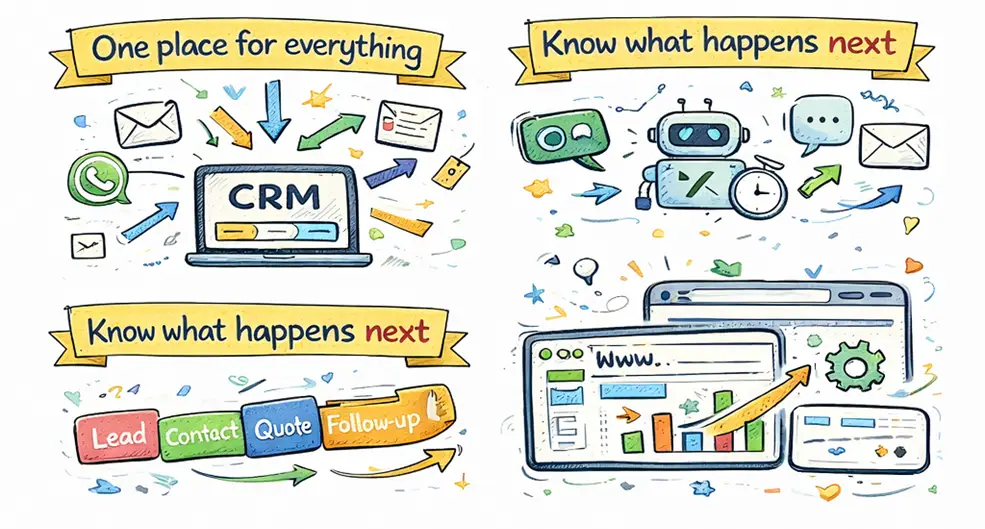
Instead of piecing together information from different places, you can see exactly where every deal stands at any given moment. Follow-ups stop being reactive and start becoming part of a consistent process. Your team works from the same view of the customer, which reduces confusion and duplication.
Perhaps most importantly, you spend less time trying to stay organised and more time actually moving deals forward.
It’s not about adding complexity — it’s about removing the kind that was already there.
Choosing a CRM Without Making It Complicated
The difference is not just organisation. It is clarity.
This is where many businesses accidentally go off track. They realise they need a CRM, and then choose something far more complex than they actually need.
A better approach is to start small and practical.
At the beginning, you don’t need dozens of features. You need a clear view of your pipeline, a simple way to track leads, and an easy system for managing follow-ups. That alone can make a significant difference.
As your business grows, your system can grow with you. But starting simple makes it far more likely that your team will actually use it — and that’s what determines whether it delivers value.
So… Do You Need a CRM?
If your business is growing and things are starting to feel slightly disorganised — even if it’s subtle — that’s usually the signal.
Not a loud one. But an important one.
At that point, a CRM stops being a “nice to have” and becomes something that gives you structure, visibility, and control.
And those are the things that allow you to grow with intention, instead of constantly reacting to what’s happening around you.
Not sure whether you actually need a CRM or which one makes sense for your business?

CAROL DIPPENAAR

How to outsource your brain
R220.00